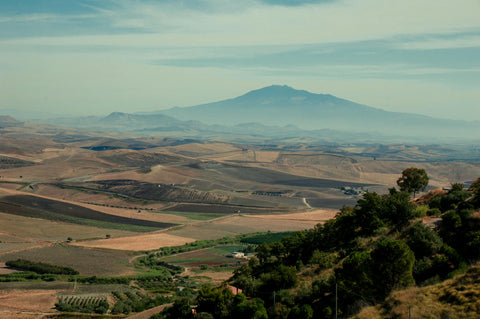
The Sicilian Family Table: Three Recipes That Never Left the Kitchen
The three recipes that never left the Sicilian kitchen are caponata, arancini and pasta alla Norma. In Sicily, a recipe is never just a recipe. It's a phone call you don't have to make because you already know what Sunday smells like. These three dishes have been passed between Sicilian hands for generations not because anyone wrote them down, but because someone stood next to someone else in a kitchen and watched. That's the whole system. That's the whole point.
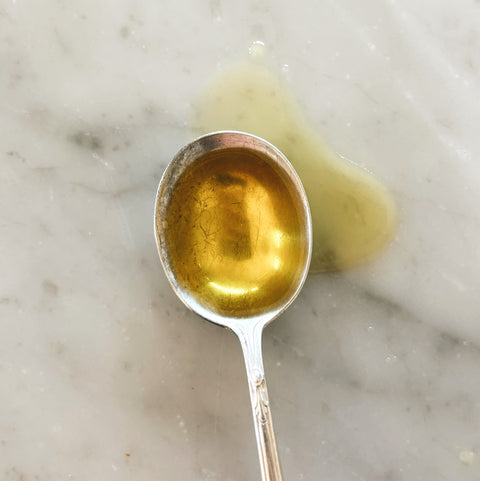
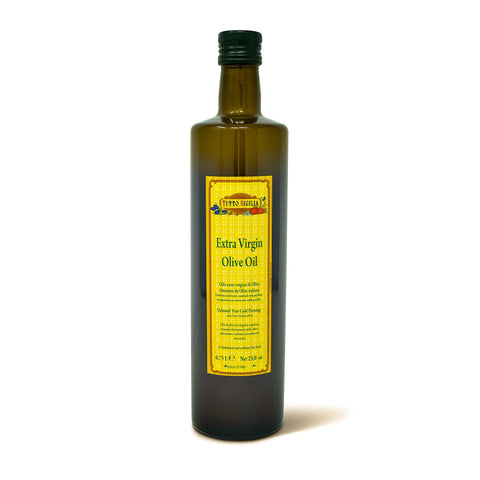
All three start in the pantry Tutto Sicilia brings home, from family farms in Sicily.

Caponata
Sweet. Sour. Older than anyone at the table.
Caponata is what happens when Arab traders, Spanish colonizers, and a Sicilian grandmother all have opinions about eggplant. The result is a sweet-sour stew that shouldn't work and absolutely does. Serve it room temperature, the day after you make it, when the flavors have had time to argue and then agree.
You'll need eggplant, tomatoes, celery, onions, capers, green olives, pine nuts, red wine vinegar, and a pinch of sugar. Salt your diced eggplant and let it sit for 20 minutes — this is non-negotiable. Fry it until deeply golden. In a separate pan, cook down your onions, celery, and capers, then add tomatoes, olives, pine nuts, vinegar, and sugar. Combine with the eggplant and let it simmer until it looks like something worth arguing about. It will.
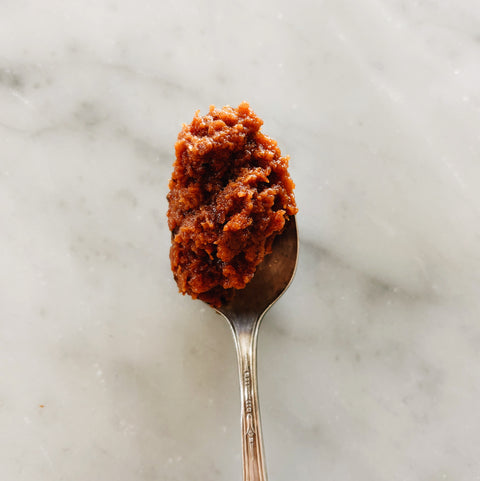
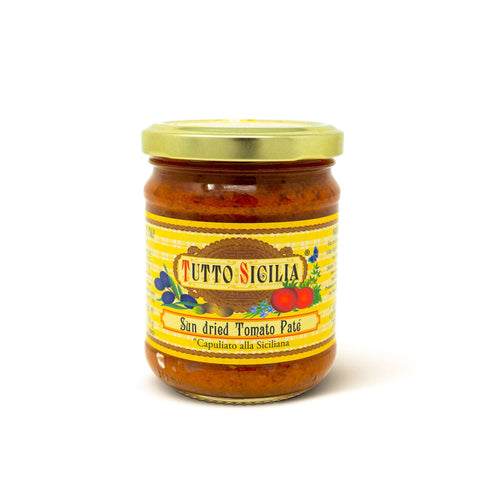
A spoon of Sun-Dried Tomato Pâté stirred into the base deepens the tomato layer considerably. Nonna wouldn't explain why. She'd just do it.
Arancini
Street food that takes all day. Worth every minute.
Arancini are Palermo in your hands — crispy, saffron-gold, filled with ragù and melting mozzarella. They are simultaneously the best thing to eat standing up and the most labor-intensive snack in the Mediterranean. Plan accordingly.
Cook arborio rice with saffron, butter, and a little parmesan. Let it cool completely. Form into balls around a center of mozzarella, ragù, and peas. Coat in flour, beaten egg, breadcrumbs. Fry until the color of late afternoon sun over the Conca d'Oro. There is no shortcut. There is only the frying.
Pasta alla Norma
Named after an opera. Lives up to it.
Pasta alla Norma is named for Norma, the 1831 opera by Catania-born Vincenzo Bellini. Fried eggplant, tomato sauce, ricotta salata, fresh basil, extra virgin olive oil — five ingredients that together become something that warrants the comparison.
Salt your eggplant, fry until golden, set aside. Sauté garlic in good olive oil, add crushed tomatoes, cook until a real sauce forms. Toss with rigatoni al dente, top with the eggplant, shower with grated ricotta salata and torn basil. Serve immediately. Receive compliments indefinitely.
These recipes don't need saving. They've survived everything — invasions, migrations, poverty, modernization — by traveling person to person, kitchen to kitchen, Sunday to Sunday. What they need is a table. Set one. Start in the pantry.
For a weeknight version, try Pasta Alla Norma's Cousin, made with Sun-Dried Tomato Pâté. And for the bigger picture, read The Artisanal Island, on what makes Sicilian food different.
Questions about these Sicilian recipes
What are the classic Sicilian family recipes?
Caponata, arancini and pasta alla Norma. All three have been passed down in Sicilian kitchens for generations, learned by watching rather than from written recipes.
What is caponata?
A sweet-sour Sicilian eggplant stew made with tomatoes, celery, onions, capers, green olives, pine nuts, red wine vinegar and a pinch of sugar. It's served at room temperature and is best the day after it's made.
Where are arancini from?
Palermo. They're saffron rice balls filled with ragù, mozzarella and peas, coated in flour, egg and breadcrumbs, and fried.
Why is it called pasta alla Norma?
It's named for Norma, the 1831 opera by Catania-born Vincenzo Bellini. The dish is fried eggplant, tomato sauce, ricotta salata, basil and extra virgin olive oil.
Some things don't translate. They just live in you.
the pantry
FROM THE SAME SHELF, GENERATION TO GENERATION